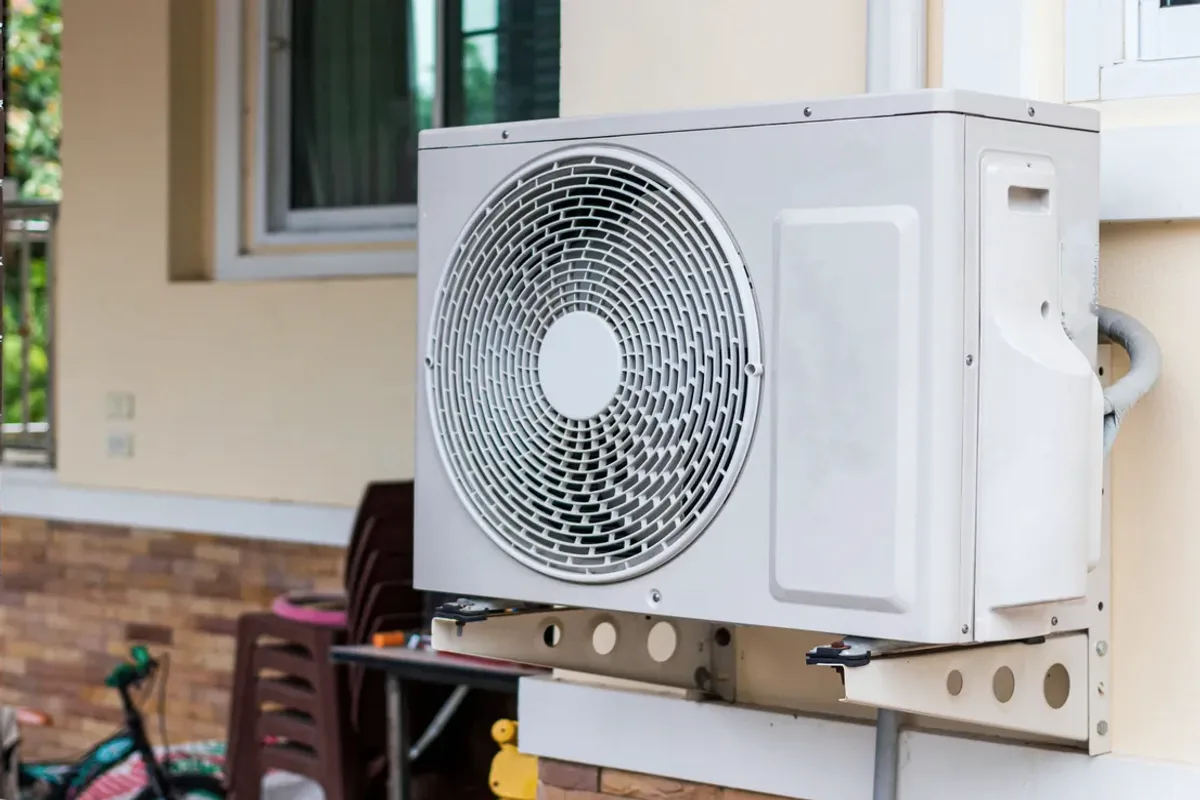
Request heat pump repair & installation for a property in Amherstburg. Include the equipment, the problem or planned work, and your location so the request can be reviewed.
Does the heat pump fail in heating mode, cooling mode, or during a change between the two?
A heat pump that struggles to heat or cool, cycles frequently, makes a new sound, or trips a breaker needs a diagnosis based on its operating mode and fault pattern. Capacitors, reversing valves, defrost controls, airflow, and refrigerant-circuit issues are distinct possibilities that require testing. If the fault is repairable, replacement may not be needed; if replacement is being considered, equipment sizing and compatibility become part of a separate installation assessment.
Record the operating mode, timing of the fault, any displayed code, and whether indoor and outdoor units respond as expected. These observations can help distinguish a control, electrical, airflow, reversing-valve, or defrost concern. Internal electrical and refrigerant work require qualified assessment. Repair and replacement are separate decisions, informed by the diagnosed fault, equipment condition, repair history, and suitability of a proposed new system.
Reversing-valve, defrost-board, and control faults
Electrical trips, fan noise, and compressor diagnosis
Heat pump repair decisions and replacement sizing
Assessment and Scope
Questions for the Proposed Work
01
Mode changes, controls, and defrost faults
A heat pump that cools but does not heat, or behaves differently during a mode change, may require assessment of its controls or reversing valve. In heating operation, an unexpected defrost pattern can also warrant diagnosis. Note when the change occurs and whether a fault code appears. The exact model and control setup matter because symptoms that look similar may involve different components. Do not attempt to bypass a control or safety device.
02
Electrical trips, noise, and compressor concerns
Frequent cycling, a breaker trip, or worsening outdoor-unit noise calls for investigation rather than repeated resets. A technician’s diagnosis may need to distinguish a fan or electrical fault from a compressor or control problem. The equipment’s operating history and any prior repairs can help establish whether a repair is practical. Stop operating equipment that presents an immediate safety concern and seek qualified assessment; do not open electrical or refrigerant compartments.
03
Repair versus replacement installation
A repair decision depends on the identified fault and the condition of the existing equipment. Replacement planning is a separate process that considers the home’s heating and cooling needs, equipment sizing, existing controls, and compatibility with connected components. If the proposed system will use existing electrical or refrigerant routes, their suitability must be assessed rather than assumed. Maintenance should follow the model’s instructions and inspection findings, not an automatic cleaning or charging routine.
Compare the next step
Have the contractor explain the existing changeover sequence in ordinary terms: which equipment supplies heat, when supplementary heat is allowed, and what the occupant should see on the control. Ask for the operating instructions and model-specific maintenance plan before changing settings inherited from the previous owner.
Cold-climate capability does not prove that one model covers every home heating load. Ask how the selected equipment and supplementary heat meet the actual design requirements.