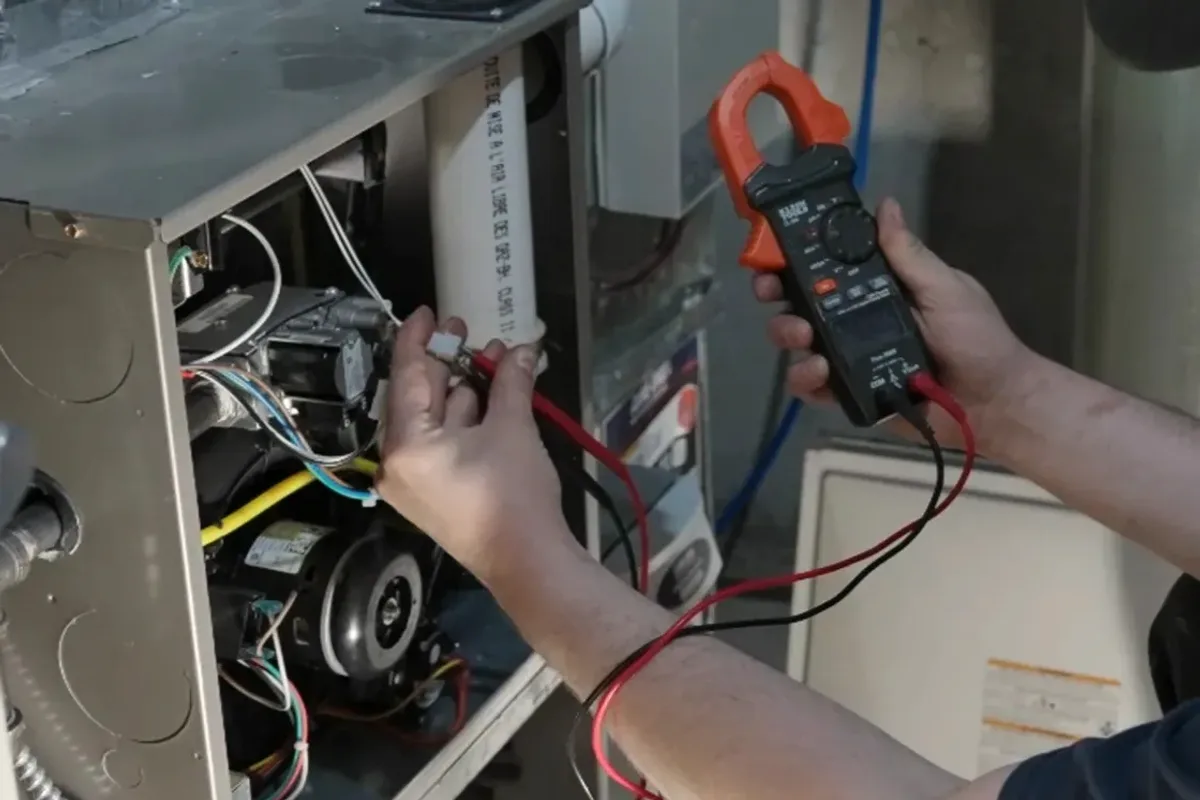
Request furnace repair for a property in Amherstburg. Include the equipment, the problem or planned work, and your location so the request can be reviewed.
Does the furnace fail to start, shut down during a cycle, or run without warming the rooms?
A furnace that will not start, produces unusual noise, or leaves some rooms cooler needs a diagnosis tied to its fuel and equipment type. Gas, propane, and oil systems have different ignition and combustion components, while high-efficiency models also have distinct venting and condensate arrangements. Describe when the symptom occurs, whether the furnace stops or continues running, and any displayed fault code. Those details help distinguish an ignition problem from restricted airflow, a control fault, or another repair scope.
Diagnosis can involve reviewing the symptom and fault code, then checking the relevant controls, airflow, burner or ignition components, and venting. The sequence depends on whether the unit uses gas, propane, or oil and whether it is a high-efficiency model. Repair is a separate decision from replacement: age, repair history, condition, and compatibility of available parts help frame that comparison.
Gas, propane, and oil furnace ignition faults
Airflow, blower noise, and uneven heating
High-efficiency furnace venting and repair-versus-replacement decisions
Assessment and Scope
Questions for the Proposed Work
01
Ignition, flame, and fuel-specific faults
A furnace that does not light or repeatedly stops may have an ignition, flame-sensing, fuel-delivery, or control issue. The diagnostic path differs among gas, propane, and oil equipment, so the exact model and fuel matter. A fault code and the timing of shutdown can help narrow the cause. Combustion and fuel components require qualified assessment; occupants should not open or adjust them.
02
Airflow, noise, and uneven heating
Weak airflow, rattling, or rooms heating unevenly can point to different issues, including a filter restriction, blower concern, duct obstruction, or control problem. Note which vents are affected, when the sound occurs, and whether the furnace continues to run. Inspection findings determine whether the work concerns the furnace itself or an airflow restriction elsewhere. These symptoms alone do not establish that a major component has failed.
03
Repair, maintenance, or replacement
A repair addresses a diagnosed fault; maintenance follows the manufacturer’s instructions and inspection findings for items such as airflow, burners, controls, and venting. Neither requires automatic replacement of the furnace. When considering replacement, compare the unit’s condition, repair history, fuel arrangement, and venting needs with the proposed equipment. High-efficiency furnaces can require different venting and condensate provisions from older models, which can change installation scope.
Compare the next step
Ask which findings need action now, which belong on a maintenance record, and which remain uncertain without further inspection. Have the contractor identify any equipment warranty or service information worth recovering. Keep the appliance identification and assessment together so a later quotation can refer to the same furnace.
Leave burner, fuel, venting, electrical, and internal equipment work to a qualified contractor. Do not bypass a safety switch or repeatedly reset a furnace.